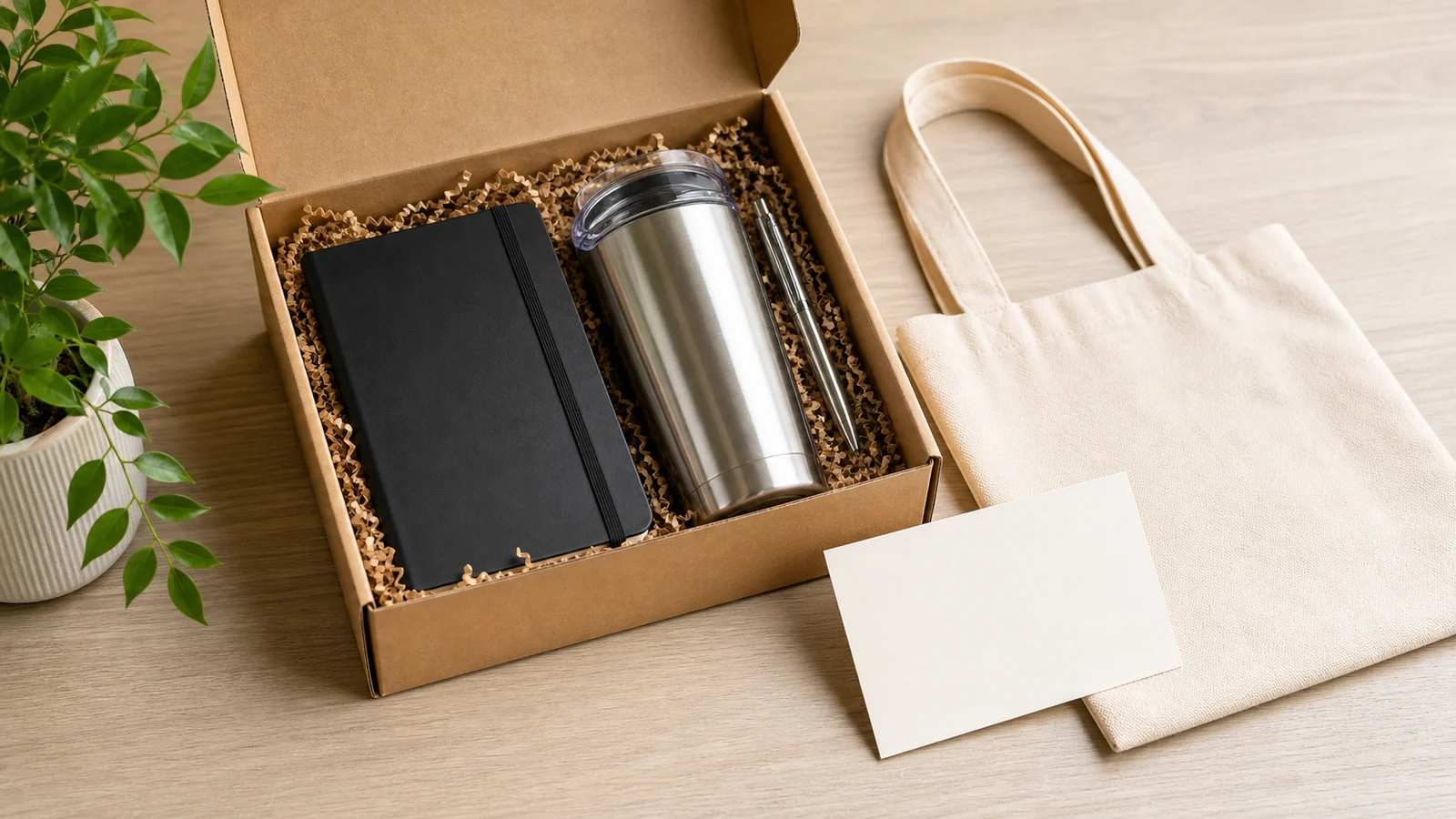
Corporate-gift discussions often start with products. Recipient conversations start somewhere else: whether the gift is useful, whether it feels like advertising, and whether it recognizes the person receiving it. That gap is why a branded item can be appreciated by one group and ignored by another.
Quick answer
For employee appreciation, cash, time off or a choice-based reward can be more appropriate than merchandise. When a physical gift is the right fit, choose one that supports a repeated routine, feels well made, uses restrained branding and gives the recipient a reason to keep it after the programme ends.
Begin with the recognition goal
A physical gift is not automatically a substitute for compensation, time or a meaningful thank-you. Decide what the programme is intended to do before selecting products. A new-hire welcome is different from a service milestone, a holiday thank-you or a sales-incentive reward.
| Programme goal | Useful gift direction | What to avoid |
|---|---|---|
| New-hire readiness | Useful first-week items for the desk, commute or hybrid work routine. | A generic bundle with no connection to work or daily life. |
| Service recognition | A recipient-choice approach or a considered item with a personal message. | Making a milestone feel like a marketing handout. |
| Holiday appreciation | Choice, a consumable, or one practical everyday item. | Assuming every household wants the same novelty object. |
| Client or event follow-up | A format connected to the relationship, event or recipient routine. | Oversized branding that makes the item hard to use publicly. |
Usefulness beats a long product list
A larger gift box is not automatically more thoughtful. One reliable item can be more valuable than several average ones when it has an obvious job: desk coffee, commuting, travel, note-taking, charging devices or carrying items during an event.
Compact drinkware or a notebook set
Confirm a stable base, comfortable use near electronics and packaging that works in a welcome kit.
Easy-carry daily item
Check weight, closure, cleaning and whether the format fits the actual journey rather than a catalogue image.
Small choice set
Offer two or three formats when the audience has different work styles, preferences or locations.
One focused presentation
Use quality cues, a personal note and controlled presentation rather than adding products without purpose.
Treat the logo as part of the product
Recipients can like an item and still avoid using it if the branding feels too prominent. Before approving artwork, compare a maximum imprint with a smaller placement. On a personal-use product such as a mug, bottle or bag, a discrete mark can protect both brand visibility and the recipient’s willingness to carry it.
Logo scale is not the only quality signal. Review colour contrast, edge detail, placement on curved surfaces, the decoration process and the packaging that protects the finished surface. Our custom logo decoration guide helps frame that conversation before a mockup is approved.
When choice is the better design decision
A single product is efficient to source, but it is not always the best experience. Consider a small set of options if recipients work in different settings, have different transport needs or already own the obvious item. Keep the programme manageable by setting one price band, a short choice list and a clear deadline.
- Offer formats, not an unfiltered catalogue: for example, compact desk drinkware, a travel format or a useful stationery option.
- Keep branding rules consistent while allowing the product form to vary.
- Use the same distribution method and clear selection deadline for all recipients.
- Collect preferences before ordering where the programme can accommodate it.
Why this topic is active in buyer conversations
Recent public discussions around employee and corporate gifts repeatedly debate three tensions: employees who would prefer cash or time off, recipients who reject heavily branded swag, and the minority of physical items people continue using because they are genuinely useful. Treat these as qualitative demand signals, not as a universal product ranking.
Approve the experience, not only the product photo
- Define the recipient, recognition purpose and preferred use setting.
- Choose one practical format or a small choice set.
- Request artwork views at two logo scales.
- Review a sample for handling, finish, decoration and packaging.
- Confirm distribution, destination and required date in the final brief.
For physical programmes, corporate gift kits can combine useful items and presentation. The final product, material, decoration, MOQ and packing route should be confirmed for the specific project before quotation.
Plan a corporate gift around the recipient.
Share the audience, recognition goal, quantity, destinations and preferred gift direction. We can help turn that context into a practical sourcing brief.
Frequently asked questions
What corporate gifts do employees actually want?
Many employees prefer cash, time off or a choice-based reward. When a physical gift is appropriate, it should fit a real routine, feel well made and use restrained branding.
Should corporate gifts have a large company logo?
Not necessarily. Compare a prominent placement with a smaller, more discreet option before approval.
Is one premium item better than a large gift set?
It depends on the programme. A focused item can feel more intentional; a set works when each component has a clear purpose.
How can an employer avoid giving unwanted swag?
Define the recipient and use setting, survey the group when possible, offer a short choice list and approve a sample before ordering.
Make the next gift easy to say yes to.
Start with who it is for and how they will use it. Product, branding and packaging decisions become clearer from there.