Buyers often ask for a dishwasher-safe custom mug as if that were one specification. In practice, it is a chain of specifications: the mug body, surface coating, printed or engraved mark, lid, gasket and any accessory may react differently to heat, detergent and repeated cycles.
Quick answer
Do not approve a dishwasher-safe claim from the blank product description alone. Ask which decoration process will be used on the exact mug, request its care instructions, and test a decorated pre-production sample under a wash routine that reflects the recipient's real use.
Four parts of a dishwasher-safe decision
| Part | What can change | What to confirm |
|---|---|---|
| Mug body | Ceramic, stainless steel, plastic and glass respond differently to heat and handling. | Material, construction and care instructions for the exact model. |
| Surface or coating | Powder coat, paint, glaze and clear finishes can have separate limits. | Whether the finished surface is approved for the intended wash conditions. |
| Logo decoration | Ink, film, fired decal and engraving attach to the surface in different ways. | Process name, compatible substrate, cure or firing route, and test evidence. |
| Lid and accessories | Gaskets, straws, sliders and handles may need separate cleaning. | Whether parts are removable and whether top-rack, hand-wash or other care applies. |
How common logo methods behave
Laser engraving on compatible coated metal
Laser engraving removes or changes the surface to create a permanent mark rather than adding a coloured ink layer. That makes it a strong route when one-colour contrast is acceptable. The cup's overall dishwasher suitability still needs confirmation because the vessel, coating edge, lid and gasket remain part of the product.
High-temperature decal on compatible ceramic
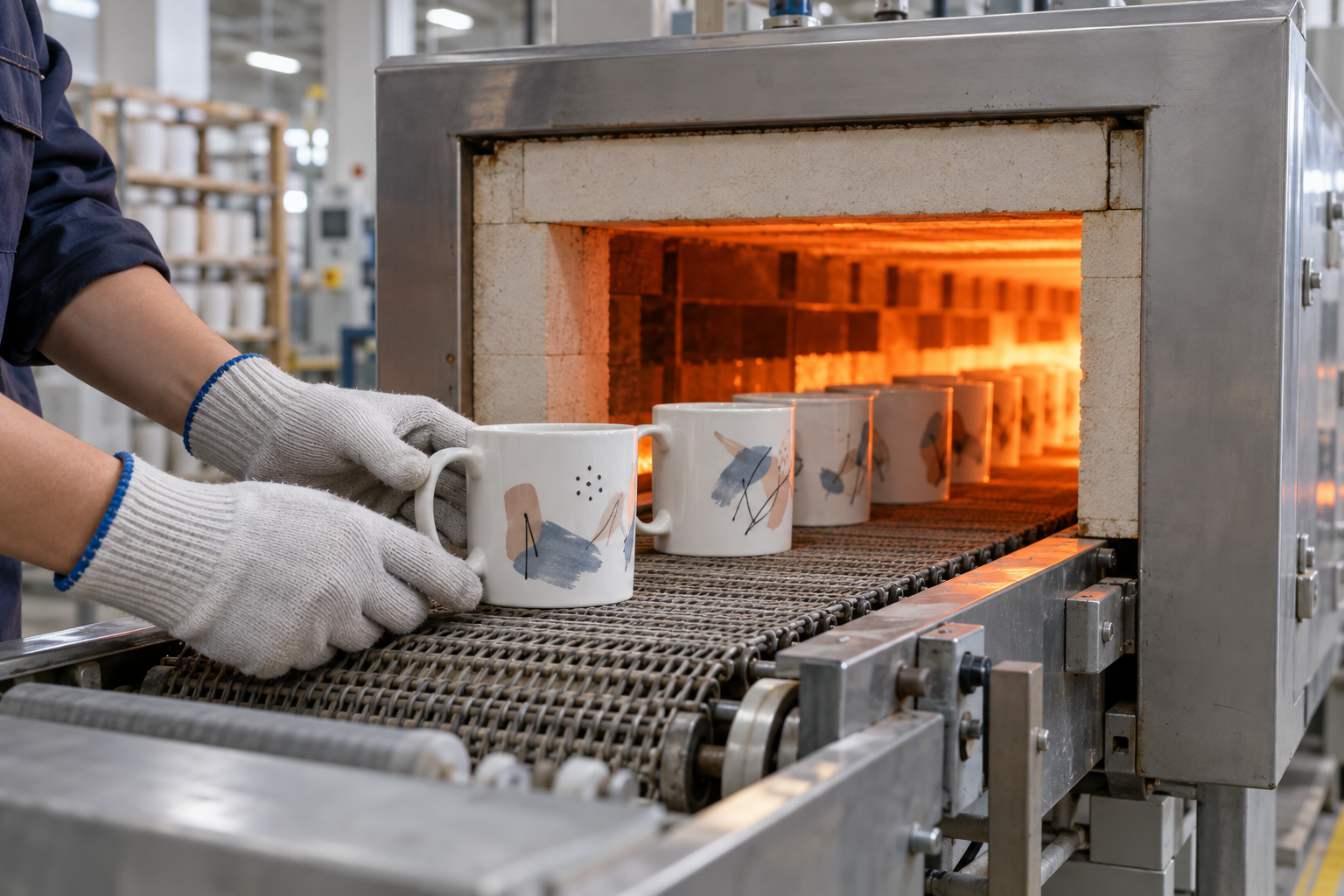
A fired decal can integrate the decoration more closely with a compatible ceramic surface than a simple surface-applied print. The result depends on the ceramic, glaze, decal material, firing schedule and artwork. Ask for the exact process and a decorated sample rather than relying on the word "decal" alone.
Screen printing
Screen printing is useful for repeatable spot-colour logos, but durability depends on ink chemistry, surface preparation and curing. A supplier should distinguish between a general care recommendation and a wash-tested claim for the finished item.
UV printing and adhesive labels
These routes can deliver detailed colour on selected surfaces, but water, heat, detergent and edge exposure matter. When long-term dishwasher use is a hard requirement, request test evidence for the exact substrate and process or select a different decoration route.
See the fuller comparison of laser engraving, UV printing and screen printing before choosing a finish.
Build a sample test that answers your real question
- Approve the exact construction. Test the production mug, coating, logo method, artwork size and colours.
- Define the wash routine. Record dishwasher type, rack position, detergent, water temperature, cycle and number of repeats.
- Set acceptance criteria. Decide what counts as failure: fading, peeling, edge lift, colour shift, cracking or surface damage.
- Photograph consistently. Use the same light and angle before and after the agreed test.
- Lock the approved route. The purchase order and proof should identify the approved product and decoration process.
A casual home test can reveal obvious problems, but it is not a universal certification. If your campaign requires a formal durability claim, agree on the applicable test method and documentation before ordering.
Why buyers keep asking this question
Public buyer discussions repeatedly separate "a mug that can go in a dishwasher" from "a logo that survives repeated washing." We used these discussions to identify the decision gap; they are demand signals, not product certification.
What to put in a durable-logo brief
- Exact mug type, material, capacity, colour and surface finish.
- Logo file, Pantone or colour references, size and placement.
- Preferred decoration method or permission for the supplier to recommend one.
- Required care claim and the wash conditions that matter to the recipient.
- Sample approval and test requirement before mass production.
- Quantity, individual packaging, destination and need-by date.
FY PromoGifts offers five decoration routes across selected custom drinkware formats. Compatibility and care instructions are confirmed for the selected product and artwork before quotation.
Make wash durability part of the quote.
Send the mug format, quantity, logo colours and intended care requirement. We will narrow the brief to a compatible product and decoration route for confirmation.
Frequently asked questions
Are all custom logo mugs dishwasher safe?
No. Confirm the mug body, coating, decoration, lid and accessories for the exact finished product.
Which logo method is most durable on drinkware?
Laser engraving is a durable no-ink mark on compatible coated metal, while fired decoration can suit compatible ceramic. The correct choice still depends on product, surface, artwork and test conditions.
Does dishwasher safe mean the logo lasts forever?
No. The claim should be tied to defined care instructions or a test. Detergent, heat, cycle and repeated use all matter.
Should I test a decorated sample?
Yes when durability matters. Test the same mug, coating, decoration and artwork that will be used for production.
What information should I send the supplier?
Send the product, material, artwork, colours, wash requirement, test expectation, quantity, packaging, destination and deadline.
Choose a decoration route you can defend after delivery.
A clear care requirement and an approved sample reduce the risk of a logo that looks good at handover but fails in normal use.