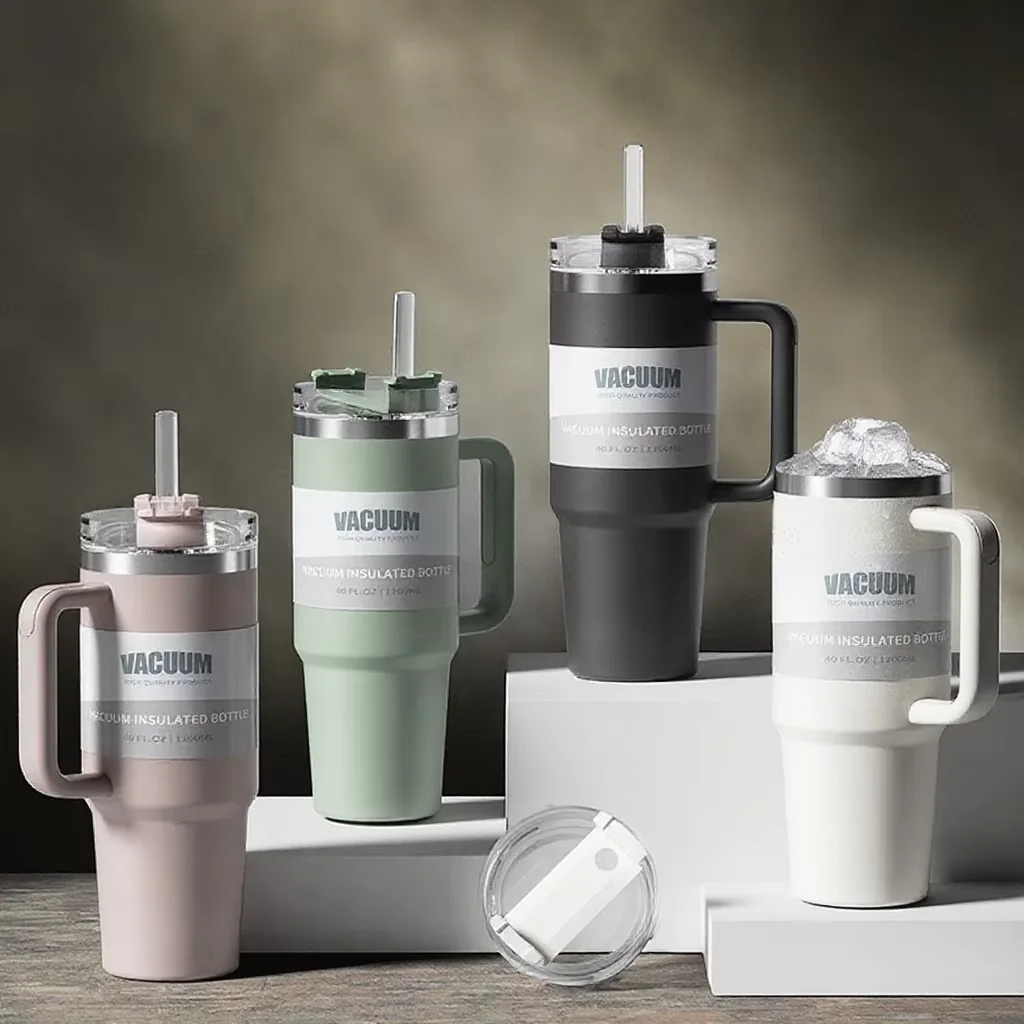
Promotional drinkware succeeds when it becomes part of a daily routine. That routine includes more than drinking: the user fills the cup, carries it, places it near a laptop or in a vehicle, takes the lid apart, washes it and puts it back together. Product selection should account for every step.
Quick answer
For easy maintenance, look for a wide opening, simple lid geometry, accessible threads and a removable gasket. For carrying, compare base diameter, filled weight, handle clearance and closure type. Describe straw lids as splash-resistant unless the exact model is verified as leakproof. Confirm dishwasher instructions for every component and the logo decoration separately.
Five usability checks before branding
Can a hand or brush reach inside?
A wider mouth is easier to inspect, rinse and dry. It also simplifies adding ice, but may need a more complex lid.
How many channels and moving parts?
Sliders, valves and straw ports add function but can create small areas that need deliberate cleaning.
Can it be removed and refitted?
A removable seal is easier to clean thoroughly when the user understands its orientation and can obtain a replacement.
What happens when the cup tips?
Test the actual product. “Splash-resistant,” “spill-resistant” and “leakproof” are not interchangeable.
Does the cup fit the intended routine?
Check total width, base diameter, weight when full, handle clearance and whether it will be carried upright or in a bag.
Which components are dishwasher suitable?
Ask separately about the body, lid, gasket, straw, coating and decoration method.
Understand the lid before promising “leakproof”
A lid with an open straw path will usually behave differently from a threaded bottle cap. It may prevent normal splashing at a desk while still releasing liquid when the cup lies on its side. A rotating cover may close the sip opening but leave another vent or straw opening.
| Lid style | Useful for | Watch for | Safer buyer language |
|---|---|---|---|
| Open straw lid | Convenient upright drinking | Not normally suitable for bag carry | Splash-resistant when upright, if confirmed |
| Slider lid | Desk and commute use | Channels beneath the slider | Closeable sip opening; verify tip performance |
| Rotating multi-position lid | Straw and sip options | More seals and assembly points | Multi-function lid; confirm each position |
| Threaded bottle cap | Bag and travel use | Thread and gasket cleanliness | Leak-resistant or leakproof only when verified |
For an event giveaway, an open straw lid may be completely appropriate. For employee commuting or customer fulfilment, a bottle with a sealed threaded cap may be safer. The campaign use determines the correct structure.
Make cleaning requirements visible
Simple structures are easier to explain
A recipient should be able to see how the lid comes apart and how the gasket goes back. If a tool is needed to remove the gasket, include instructions. If a slider is removable, show the removal direction. If components require hand washing, state that clearly on an insert card or product page.
Dishwasher-safe is not one blanket claim
The stainless body may tolerate a dishwasher while a lid, coating or decoration requires hand washing. Heat, detergent and repeated cycles can affect parts differently. Ask for the confirmed care method for the finished, decorated product—not only the blank cup.
Drying matters too
A narrow bottle may be easy to rinse but slow to dry. Deep lid channels can retain water. A practical sample test should include full drying after disassembly, because persistent moisture changes how convenient the product feels over time.
What users repeatedly ask for
Community conversations about reusable bottles repeatedly prioritise simple lids, removable seals, wide openings, cup-holder fit and reliable closure behaviour. These themes are valuable when building a product brief because they reflect the friction recipients notice after the campaign is over.
- Discussion about dishwasher-safe bottles and lid cleaning
- Discussion focused on easy cleaning and leakage
- Large tumbler discussion covering handles, fit and leakage
Community comments identify questions to investigate; they do not verify a supplier specification.
Carry comfort depends on dimensions and weight
A 40 oz cup contains about 1.18 litres before accounting for the product’s own weight. The handle may make that manageable, but it also increases width. For vehicle use, request the base diameter and compare it with likely cup holders. For walking or public transport, consider whether a sealed bottle is more practical than a straw tumbler.
Capacity comparisons should therefore be tied to the campaign. Our 30 oz vs 40 oz tumbler guide covers filled weight, logistics and use settings in more detail.
Run a normal-use sample test
- Inspect the cup, lid, straw and gasket separately.
- Wash each component according to the supplied instructions.
- Reassemble without factory assistance and check that the gasket orientation is clear.
- Fill the product, close it and test the permitted carrying position.
- Place it in the relevant cup holder or bag only if the closure is designed for that use.
- Drink through each opening and check flow, venting and handle comfort.
- Disassemble, clean, dry and reassemble again.
- Review the logo after the approved care cycle.
The sample should represent the selected product and decoration method. A blank sample helps confirm ergonomics, while a decorated pre-production sample is more useful when coating, adhesion or wash appearance is critical.
Add these questions to the RFQ
- What is the exact capacity, empty weight, height, widest diameter and base diameter?
- Is the closure intended to be leakproof, leak-resistant or only splash-resistant?
- Can the gasket and slider be removed? Are replacements available?
- Which parts are dishwasher suitable, and which require hand washing?
- What care instructions apply to the selected coating and logo method?
- Does the product include a straw, brush or spare seal?
- What are the individual packaging and master-carton dimensions?
- Can a representative sample be supplied before mass production?
Review our selected custom drinkware range and the drinkware decoration comparison. Final specifications, availability and care requirements are confirmed for the chosen item.
Choose a cup people can live with
Tell us how recipients will carry, clean and use the drinkware. We can narrow the options by lid structure, capacity, branding and packaging before quotation.
Frequently asked questions
What makes a water bottle easy to clean?
A wide opening, simple lid, accessible threads, removable gasket and few hidden cavities generally make cleaning easier.
Does a straw tumbler leak when tipped?
Many straw tumblers resist splashes while upright but are not designed to be leakproof when tipped or carried in a bag. Confirm and test the selected model.
Can custom printed drinkware go in a dishwasher?
Confirm the body, lid, gasket, straw, coating and logo decoration separately. A dishwasher-suitable body does not automatically make the finished product dishwasher safe.
What should buyers ask about gaskets?
Ask whether the gasket is removable, how to clean and reinstall it, and whether replacements are available.
How should a sample be checked?
Fill, close, carry, test fit, disassemble, clean, dry and reassemble it under normal-use conditions, then inspect the decoration.
Put usability into the product specification.
Selected custom drinkware starts from 100 pieces. Share the recipient, use setting, quantity, logo, destination and deadline so the correct structure and decoration can be confirmed.